Henan Zhongyu Dingli Intelligent Equipment Co., Ltd.
Create a new mine management model for the whole life cycle
Focusing on sand and gravel aggregate industry for over 30 years
Our professionalism comes from: 30 years in the business, 22 service centers, Construction of more than2,000 aggregate production lines,5,000 customer cases, a test base with annual output of 10 million tons!
Zhongyu DingLi always insists on combining technical innovation with market demand and production practice, and is committed to R&D and manufacturing of mining crushing equipment, sand and gravel aggregate production, R&D and production of conveying equipment, rental equipment, EPC general contract construction and operation of sand and gravel aggregate production line, all-in-one green building materials recycling industrial park construction, R&D and promotion of mine intelligent management system, industry management software for building materials manufacturing, industry tax control software etc. Since its establishment, the Company has been adhering to the development concept of "producing the quality mining equipment for customers and providing perfect after-sales service for customers", insisting on excellence in every aspect of equipment development, manufacturing and quality inspection, as well as in every process of production line design, installation, commissioning and after-sales service. More than 2,000 sand and gravel aggregate production lines have been built throughout the country.

Over the past 30 years Zhongyu Dingli has made unremitting efforts
Committed to building a new type of green mine with sustainable development
With 30+ years experience in stone production & processing and operational practice of 2,000+ production lines, Zhongyu Dingli now has ten test bases for equipment R&D and sand and gravel aggregate production, covering an area of nearly 25,100 square meters, and the first phase of the large intelligent integrated production workshop of new plant of Zhongyu Dingli Intelligent Equipment Co., covers an area of 32,000 square meters. With a skilled design team, professional and excellent production staff, advanced production and processing equipment, the Company constantly absorbs the international and domestic advanced R&D concepts and manufacturing processes, so that the product performance and quality can be deeply recognized by the industry and market.
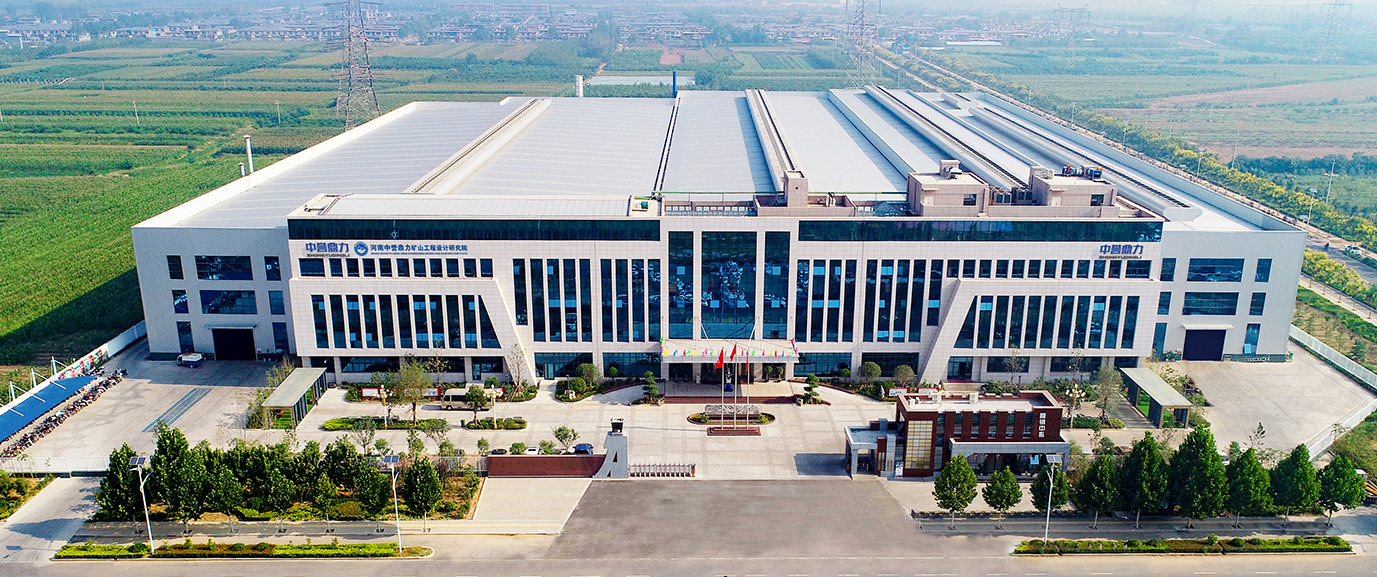
Zhongyu Dingli insists on promoting green and sustainable development of sand and gravel industry with professional & efficient mining equipment and complete solutions for sand and gravel aggregate production lines.
The Company has independently developed DLPCZ heavy-duty hammer impact crusher, DLPC shaping crusher, DLHGC horizontal gyratory crusher, DLM crawler mobile station, DLEV jaw crusher, DLSI vertical shaft impact crusher, DLM dry sand making and shaping system, DLZSJ double-roller sand making machine, DLKZS reversible sand making machine, DLYKZ vibrating screen, DLZGC feeder, DLMC pulse bag filter, conveyor and other equipment with a total of 100+ specifications and models used by more than 5,000 customers. The products are all over the country and have obtained good market evaluation.
International Certification
Relying on the support of core technologies such as 25 invention patents and 104 utility model patents, the company devotes itself to the R&D and manufacturing of high-performance mining equipment. Its core products include jaw crusher (E-breaking), heavy hammer crusher, horizontal gyratory crusher, vertical shaft sand making machine, mobile crushing and screening integrated machine, etc. At the same time, it provides mining intelligent control systems and a complete set of sand and gravel aggregate production line solutions. The company has established a professional physical and chemical testing center, which strictly controls the quality of raw materials and products throughout the entire process from raw material procurement, production and processing to finished product delivery, ensuring stable and reliable product performance.
Choose Zhongyu Dingli: Partner with Professional Expertise & a Dedicated Team
To empower global customers, the company has built a global service network with more than 30 service centers, equipped with over 1,000 professional engineers and more than 30 mobile service vehicles, providing 7×24-hour quick response services. Its business scope covers one-stop full-chain services from single-machine supply to whole-plant planning, construction and commissioning, with the fastest commissioning and delivery achievable in 58 days. The company is always committed to providing customers with full-life-cycle service support and is a trustworthy partner in the building materials and mining field.
We always believe that quality comes
from professionalism and begins with concentration
The escalating demand for products is the driving force of our innovation
There is no product which can sell well forever in the market. Customers' ever-changing demand for product output, performance and quality is the driving source for enterprise innovation and development. Due to different regions, raw materials and sites, customers have various demands for products. As a heavy equipment manufacturer with rich experience and a trustworthy partner, we always adhere to the principle of customer first. In order to provide customers with better quality products, we keep using professional talents and multiple innovation platforms to ensure the Company's continuous progress in technological breakthroughs, product upgrades and quality improvement.