Currently, there are two main types of manufactured sand production in China: one is specially produced manufactured sand, whose particle gradation and fineness modulus can be superior to natural sand, and whose particle shape can also be similar to natural sand; the other is produced from various industrial wastes or as a by-product. This is the main body of current manufactured sand, most of which is stone chips from crushed stone production that are simply treated, screened, classified, or directly used.
Manufactured sand made from stone chips is widely used. However, some stone chips with imperfect particle gradation or shape, when used as fine aggregate, result in poor workability and low strength of concrete. This has led some to mistakenly believe that manufactured sand is inferior to natural sand. The essential difference between manufactured sand and natural sand is that multiple indicators of manufactured sand are adjustable and controllable. Therefore, with mature and standardized production processes and strict adjustments, manufactured sand with ideal performance can be produced. Upon delivery, manufactured sand should undergo re-inspection and grading evaluation in accordance with the same standards as the factory inspection.

Stone powder differs from clay in natural sand in terms of composition, particle size distribution, morphology, and its role in concrete. Stone powder is inevitable in the production of manufactured sand, and an appropriate amount of stone powder exerts a beneficial effect. The variation range of stone powder content should not exceed ±2%. In concrete, an appropriate amount of stone powder plays a filling role, helping to enhance the strength and firmness of manufactured sand concrete. However, the optimal stone powder content varies with the strength grade of concrete. Cement, mineral admixtures, and other materials for concrete should be stored separately in bulk piles.
The complete particle gradation and rough surface of stone powder exert excellent filling effect, nucleation effect, pozzolanic effect, water retention effect, and lubrication effect at the concrete interface. When the stone powder content is 10%~15%, the water pressure resistance of concrete is optimal. The reason is that when the stone powder content in manufactured sand is low, the paste content in concrete is insufficient, and stone powder can act as a micro-aggregate to increase the compactness of concrete. Conversely, when the stone powder content is too high, the proportion of stone powder relative to cement is excessive, which disrupts the packing effect of concrete. At this point, cement cannot fully wrap the stone powder, reducing the impermeability of concrete. When the stone powder content exceeds 20%, the impermeability decreases sharply. Although higher stone powder content makes the paste denser and reduces porosity, it reduces the crystal size of hydration products, changes their orientation, modifies the actual water-cement ratio of the paste around aggregates, and alters the workability of concrete. In addition, as the stone powder content in manufactured sand increases, the permeability coefficient of manufactured sand concrete gradually decreases, further enhancing the compactness of the cement paste.
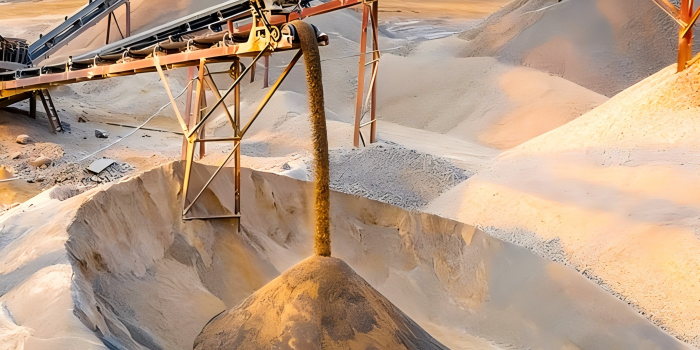
Of course, if the parent rock is siliceous rock, sandstone, or other materials with high water demand, a high stone powder content may increase the water consumption of concrete. Therefore, the stone powder content of manufactured sand should be appropriately adjusted. Production practice shows that a stone powder content of 8%~10% works well for concrete of various strength requirements. It is not the case that higher strength grades require lower stone powder content; instead, the key is to optimize the methylene blue (MB) value. Using stone powder with an MB value of no more than 0.5 yields the best results. However, an excessively high stone powder content increases water consumption, which affects the strength of concrete and may cause plastic cracking. These are the positive and negative effects of stone powder, respectively.